Over the past few months, our team at B Lab Australia & Aotearoa New Zealand completed AU Consulting‘s Māori Executive Cultural Capability Program. We’re sharing what we learned, and how we’re putting it into practice through four team challenges.
Before our training began, our Aotearoa Lead, Michele Wilson (Waikato Tainui, Ngati Pāoa, Ngati Whatua ki Orakei) shared a whakataukī with the team: Mā te huruhuru ka rere te manu, which means “adorn the bird with feathers, and it will soar.” It became our philosophy for the program. Strong foundations, laid with intention and without rushing, have the greatest long-term impact.
Representing B Lab in our region, we work across two countries, each with its own unique history of colonisation. In Aotearoa, that means understanding Te Tiriti o Waitangi and what it asks of us as a Treaty partner. It also means recognising that the Māori economy, now estimated at more than NZ $32 billion and an even greater asset base, is already home to much of Aotearoa’s purpose-led business. B Corp values such as stewardship and long-term thinking find easy homes in te ao Māori values such as kaitiakitanga.
We have at least 10 Māori-owned B Corps in our community, and growing interest from more of the Māori economy. To support our commitment to partnership and self-determination for Māori, and to model the practices we ask of B Corps, we needed to build our own cultural capability first.
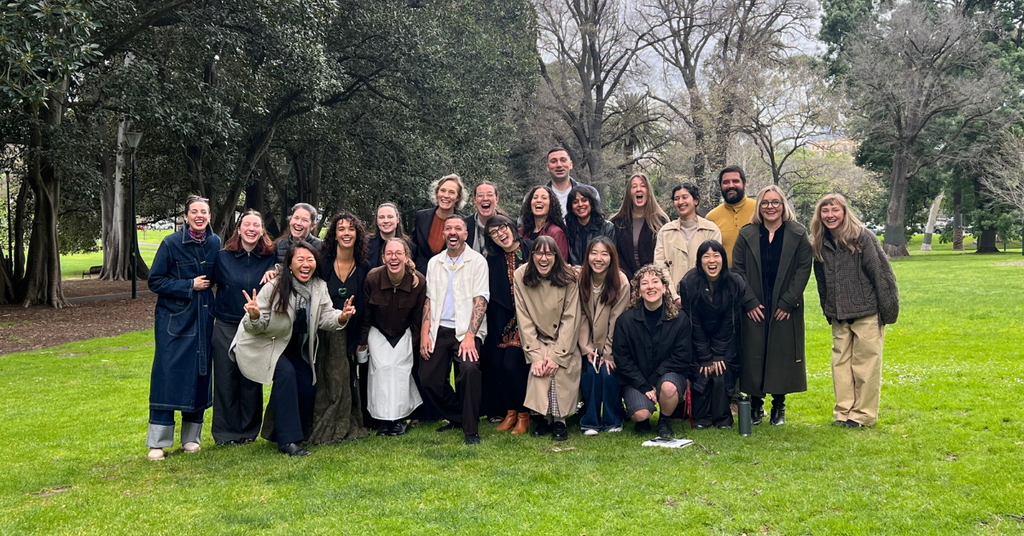
Learning the history, values and worldview behind tikanga
The programme went deeper than te reo and tikanga. As Michele puts it, building cultural capability means “understanding the history, values, and worldview that sit behind them.”
Three Māori values resonated across the team:
- Manaakitanga: care, hospitality and respect. It asks us who is being supported and how, not just what needs to be done.
- Whanaungatanga: connection, and making time to build relationships before getting down to business.
- Rangatiratanga: self-determination, and making decisions together.
For many of us, the training brought new understanding of Te Tiriti o Waitangi. Learning the difference between the English and te reo Māori texts reminded us of the power of language. Others found the Te Tiriti principles of partnership, participation, and protection a practical lens for reviewing our own policies.
The training also reminded us that progress matters more than perfection. “I feel more comfortable with not always getting everything perfect,” our Policy & Advocacy Coordinator Paris reflected. “It is in the intent and effort put into learning, unlearning, and doing better next time.”
From learning to action: the wero
To make sure the program led to change, each team joined an Ohu Mahi (working group) and took on a wero, a practical challenge in our own area of work. We shared our progress throughout the three months, and presented our work at a final in-person wānanga.
In our four teams, we’ve been working on:
- a practical guide showing how the Justice, Equity, Diversity & Inclusion (JEDI) Impact Topic requirements in B Lab’s Standards Version 2 can support Māori businesses and communities
- a revived Māori & Pasifika B Corp Collective, with its first hui on 17 November 2026
- a new regional style guide, image policy, and internal onboarding video, plus a Māori engagement section in every new communications strategy
- improved systems for our equity pricing policy for eligible Māori and First Nations B Corps, a procurement policy that features Māori and First Nations suppliers, and people policies that recognise tangihanga and to reach more Māori candidates
What the wero taught us
Simple language turns intent into action. We know that the main challenge companies face is making the standards actionable, so we focused on setting out the intent of each JEDI requirement and the practical steps any role can follow. We included example evidence and tips in plain language to make them easier to act on. We’re now using this approach in other areas, including how we explain requirements to B Corp Consultants.
Relationships come before outcomes. It was tempting to arrive at the Māori & Pasifika B Corp Collective with a plan. Instead, guided by whanaungatanga and rangatiratanga, we’ll let members co-design its purpose and goals, with B Lab in a supporting role. Mā te huruhuru ka rere te manu: starting slowly and with intention builds something that lasts.
Design with Māori, not for Māori. Across every wero, the strongest ideas involved partnership: co-designing cultural leave with Māori kaimahi, working with organisations like Amotai, and asking iwi to review our image policy before finalising it.
We have to start with ourselves. Our audit found that our equity pricing wasn’t being applied to every eligible B Corp, partly because our data relied on self-identification. Fixing our own systems matters, because when we get our policies right, we can model the practices we ask of B Corps.
Te Tiriti is a practical lens. The principles of partnership, participation, and protection gave us a clear way to review our policies, from procurement to recruitment.
What’s changed day to day
Some of the most meaningful shifts are the everyday ones:
- More of our team now open and close meetings, including external ones, with karakia.
- Team members share their mihimihi confidently, without relying on notes.
- We pronounce te reo Māori, including place names, more accurately and naturally when we work with B Local leaders and communities.
- We’re reusing the wero approach in our work. Our certification team is using the plain-language structure to translate requirements for B Corp Consultants.
- We’ve reviewed our equity mechanisms to make sure they’re applied consistently across our community.
A shared responsibility
For our Aotearoa Lead Michele, the most important shift is who carries this work. “Building cultural capability is a shared responsibility,” she says. “It shouldn’t sit with Māori staff alone, but be something we all take ownership of and contribute to across the organisation. That’s something I am most proud to see the team take ownership of: not just karakia, but speaking up for Māori voices so it is embedded in our ways of working.”
“The real impact will come from what we do differently as an organisation going forward.”
That’s our focus now. Over the coming months, we’ll reconnect the Māori & Pasifika B Corp Collective, finalise our procurement and people policies, bring Aotearoa-specific resources to our Standards team and assurance providers, and keep building reciprocal relationships with Māori businesses and communities across Aotearoa.
Ngā mihi nui to AU Consulting and all those involved in this training. We’re grateful to everyone who shared their culture, history and knowledge with our team so openly.
