Recertifying to B Lab’s new standards pushed KMD Brands Head of ESG (Environmental, Social, and Governance) Shasta O’Loughlin to recognise and document initiatives already in place, while introducing new ones to clear the higher bar.
KMD Brands spent the past year preparing for a journey on uncharted territory: recertifying on the new B Lab Standards V2.
The group encompasses Kathmandu, Rip Curl, and Oboz Footwear, and this recertification was also the first time the process was undertaken at a group level, rather than separately for different brands with very different origins.
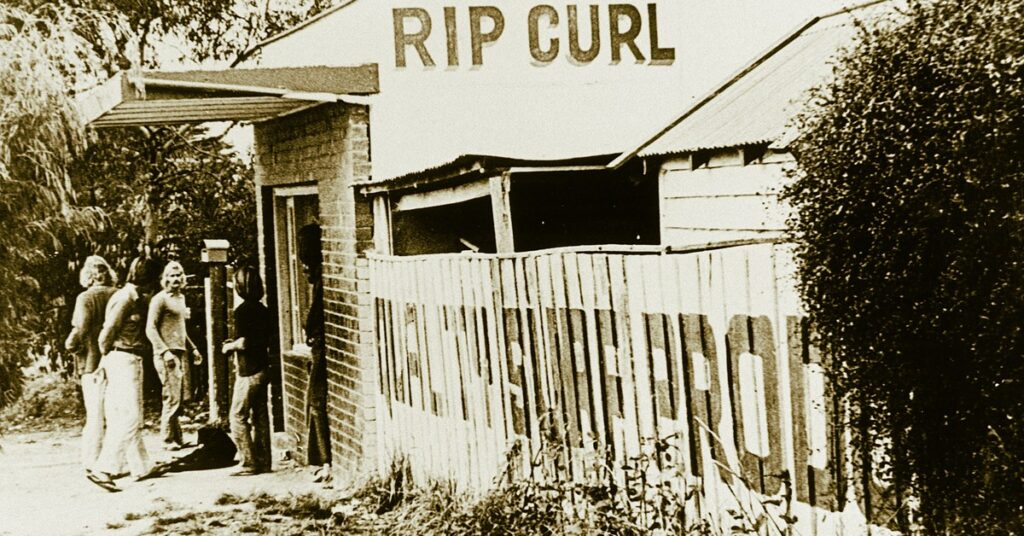
Rip Curl was born in the Aussie surf town of Torquay back in 1969, Kathmandu was founded in Aotearoa New Zealand in 1987, and Oboz Footwear started in Montana, U.S. in 2007. With three brands from three different countries created in three different decades aiming to recertify under one organisational umbrella, KMD Brands had its work cut out.

Trust the process
The B Lab Standards V2 signal a significant shift in how B Corps get certified, designed to ensure the integrity of the certification over the long term. They feature minimum requirements across seven Impact Topics: Purpose & Stakeholder Governance; Climate Action; Justice, Equity, Diversity & Inclusion; Government Affairs & Collective Action; Fair Work; Human Rights; and Environmental Stewardship & Circularity. Certification decisions are now made by independent third parties to further increase impartiality.
Involving four site audits across four locations, the recertification process revealed that each brand already had plenty of good practice in place that had never been formally documented or shared more widely.
“You may view a question in a formal way, but when you actually think about it, you realise there are ways we have always done that in our business,” says O’Loughlin. “It may not be formally written up, but when you start breaking it down, it is there being put to practice in business operations.”
“V2 recertification made us formalise many of our global initiatives. We knew regions were doing things, but I didn’t have the finer details. This process forced us to collate and document all those initiatives and processes formally.”
Long-running initiatives that came into focus while recertifying included university partnerships on textile waste and recycling, charity partnerships and volunteer hours, 25 years of Planet Day at Rip Curl, wage pilots in Bangladesh, and membership to the Fair Labor Association and Cascale (formerly the Sustainable Apparel Coalition).

Weighing up a single owner or a working group
Saying “sometimes you just want to get it done,” O’Loughlin chose to lead the project in-house without consultant support, using B Lab’s Raising the Bar online program to upskill. The free, online, self-paced training resource supports impact-driven businesses to navigate the updated standards.
She sees great value in how B Lab Standards V2 highlight elements that may not necessarily be on an organisation’s radar, including trickier ones that may have been put off because they seemed complex.
“It is definitely a great process to go through to understand the ins and outs of your business’ operations, how decisions are made, and how policies are implemented,” she says.
Tackling the project solo was a big undertaking, but it had some clear benefits. It was faster, gave tighter quality control, and meant she could check everything for compliance before it went to the auditor. But it did cost the organisation opportunities for wider employee engagement, which was a highlight from Rip Curl’s first certification. “The single-person dependency risk is high this way. I think the process works better as a team,” reflects O’Loughlin, who also sees resourcing as a key factor: “Recertification is a great opportunity to engage staff, but sometimes you just have to get the work done!”
Raising the bar for responsible business
KMD Brands had varying results across the seven Impact Topics. The group was well ahead on Climate Action, having tracked its footprint with external audits for almost a decade. Justice, Equity, Diversity & Inclusion was the clear focus area that emerged. “This section clearly stood out for us as an area where we could be doing more,” says O’Loughlin, who points out that Rip Curl has a Reconciliation Action Plan in Australia but no equivalent in the U.S. or Europe. The team also plans to focus on Fair Work and the living wage requirements in the coming years.
“V2 asks more of B Corps, but it’s a good thing. The rigour is what gives certification its value, for the business and for the customers, workers, and stakeholders who rely on it. KMD Brands shows that if you’re already doing the work, the standards help you prove it and show you where to go next,” says Lauren Diggle, Community Transition Lead at B Lab Australia & Aotearoa New Zealand.
Looking back on the recertification process, O’Loughlin is certain that businesses with the right foundations — and commitment — will be able to meet the new standards.
“If you’re already doing business responsibly, you shouldn’t have a problem meeting the requirements.”
Five practical tips from KMD Brands
For businesses preparing to certify or recertify on V2, especially multi-brand or multi-region groups, KMD Brands’ experience points to five things to do.
- Build a team, not a hero. One owner is faster, but it concentrates risk and limits engagement. Form a working group with a clear lead, and give each Impact Topic an owner.
- Collect what your teams already do. If you have multiple brands or offices, ask each to list its initiatives early. Long-running programs often meet requirements once you break the question down.
- Run gap analyses on your weakest areas first. Find out how big your gaps are early while there’s still time to act.
- Use the free support. Raising the Bar gives a clear roadmap for trickier requirements, so work through one Impact Topic at a time.
- Look ahead to Year 3 and Year 5. Requirements step up over the certification cycle. Start planning for them now, and use certification to help get internal priorities over the line.
Ready to get started? Explore the Raising the Bar program or log in to B Impact.

