On March 11, B Lab opened submissions for certification and recertification under the new B Lab Standards V2. For many B Corps, it’s landing with a mix of excitement, curiosity, and, understandably, some uncertainty.
Recertification has never been a light lift. It takes time, effort, and a willingness to be challenged. The new standards raise the bar again — more rigorous, more integrated, reflective of the B Corp movement’s leadership, and more reflective of the role business needs to play today.
While it is a step up, it’s also a step forward.
If you’re weighing up what recertifying on the new standards means for your business, here are a few things worth considering.
Future-proofing your business
For many businesses, one of the biggest challenges right now is keeping up with a growing list of frameworks, regulations, and reporting expectations. The updated B Lab Standards help bring some order to that complexity. They’re designed to align with leading frameworks and emerging regulation, so the work you’re doing here can support what’s required elsewhere.
The new standards are:
- Aligned with the European Union’s Empowering Consumers for the Green Transition (ECGT) directive and Corporate Sustainability Reporting Directive (CSRD)
- Compliant with ISO 17021-1 requirements
- Interoperable with frameworks like Global Reporting Initiative (GRI) standards and Carbon Disclosure Project (CDP) framework
- Interoperable with several other frameworks and standards
This means less duplication, and a more joined-up approach to managing impact.
As Rosanna Iacono of the Growth Activists says,
“This ‘measure once, report many’ approach creates massive operational efficiencies.”
There’s also a shift in how the standards work. Rather than a broad checklist, they’re moving towards something closer to a simplified impact system, helping you focus on what’s most material to your business and embed that into how you operate day to day.
Critically, this also helps surface risk. Whether it’s in your supply chain, governance, people policies, or environmental impact, the process gives you a clear picture of where you stand, including where you might need to go further.
The data also tells an important story. Operationally, we know B Corps are more resilient to major economic shocks. Reviewing data from the COVID-19 pandemic across four countries including Australia, we found that a greater number of B Corps remained in operation between 2019 to 2023. Over 95% of the B Corps we studied stayed in business, while only 88% of comparable non-B Corps did the same.
Globally and in our region, B Corp Certification is also significantly associated with higher employee satisfaction. For companies looking to attract and retain engaged, values-aligned employees, certification is not only a powerful signal: it’s a framework for best practice.

Images: Elin Bandmann
Credibility in a crowded landscape
Research conducted in 2025 by B Lab AANZ showed most people (81% of Aussies and 82% of Kiwis) agree that it should be mandatory for businesses to consider the interests of all stakeholders — including people and the planet — in their decision-making. This tells us that people care about the actions of companies: whom they benefit, and what harms they cause, even if it’s not on the ballot.
The same 2025 research showed significant increases in B Corp brand awareness: one in three people now recognise the B Corp logo. This represents a ten per cent point increase in Australia and a thirteen per cent point increase in Aotearoa since 2024.
B Corp Certification has always been about independent verification, but the updated model strengthens that further, with certification decisions fully made by third parties and aligned with international assurance standards.
For businesses operating in or selling into EU markets, meeting ECGT requirements — designed to prevent greenwashing — will become essential from September 2026 onwards.
This represents an important milestone in the pursuit of better outcomes for people and planet.
The new B Lab Standards have been designed to ensure ECGT compliance, meaning B Corp will be a valid sustainability label in the EU, offering peace of mind at a time when other businesses may be exposed to legal risk.
With the ECGT directive representing a world-first in anti-greenwashing regulation efforts, other regions and countries are likely to follow suit.
In practical terms, certification on the new standards gives you something solid to stand on. A way to show — not just say — that your business is meeting verified, credible standards across the board.
Access to tools and community
Recertification is also an entry point into better tools and ongoing connections.
The new B Impact platform is evolving into more of a practical management tool, helping you track progress, prioritise action, and build impact into everyday decisions — not just every three years.
Alongside that, there’s the community. One of the most consistent pieces of feedback from B Corps is the value of being part of a network of businesses with shared values. Whether it’s seeking advice, finding partners, or learning from others further along, that connection is a big part of what makes the community special.
Business leadership is a less isolating experience when you have hundreds of others with you on the journey.
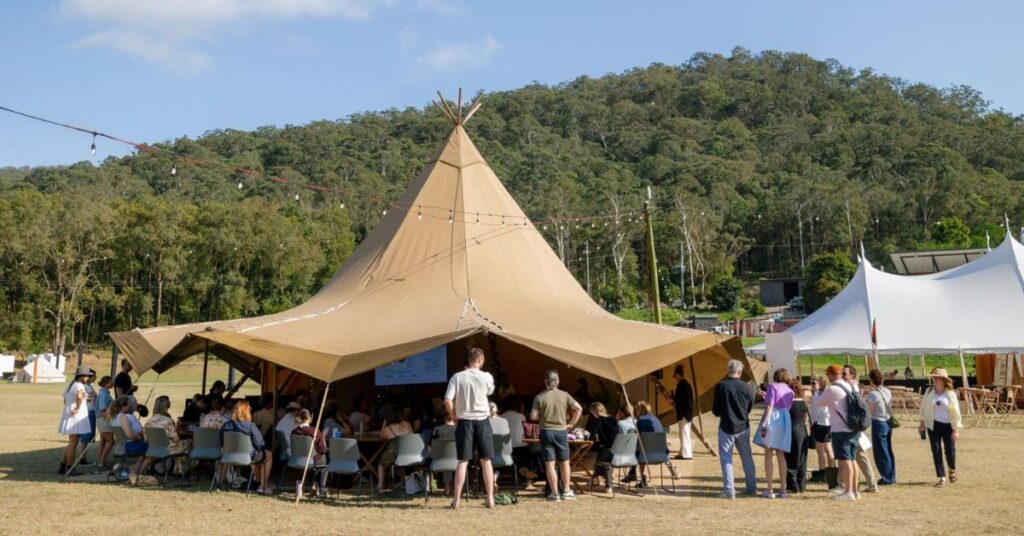
Our last B Corp community gathering, Assembly 2025, held on Darkinjung Country in New South Wales, was a testament to the power of the AANZ B Corp community: some of the brightest and most generous people in business.
Images: Elin Bandmann
A step up, a step forward
The new standards are ambitious, designed to reflect the character and quality of our B Corp community, and to support the community to continue stepping up. In an increasing atmosphere of social, economic and environmental volatility, the new standards seek to galvanise meaningful action on pressing issues whilst offering an integrated framework for future-proofing.
For existing B Corps, recertification is a chance to build on what’s already there. To sharpen your approach, strengthen your systems, and stay part of a group of businesses pushing things forward. Continuous improvement is now embedded within the new standards, giving companies the clarity and confidence to set longer-term improvement goals and improve outcomes.
As Abigail Forsyth, Co-Founder and Director of KeepCup says of its own upcoming recertification:
“Accountability beyond shareholders is no longer a nice-to-have: it’s become the cost of entry for any brand claiming to do good. And frankly, corporations law is overdue for the same shift, away from solely recognising individual shareholders to considering the communities they serve and the environments they take from. B Corp isn’t waiting for that legislation. It’s building the culture change that can drive it.”
— Abigail Forsyth, Co-Founder and Director of KeepCup
Ultimately, this is about more than keeping a certification; it’s about continuing to lead alongside others in shifting what good business looks like.
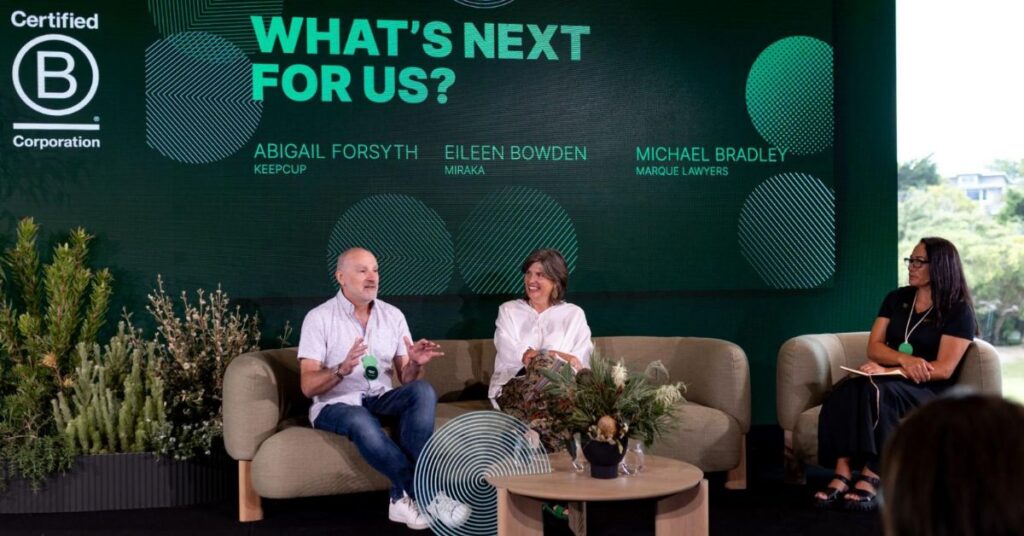
Image: Sally Batt Photography
What’s next?
If you’re unsure about whether recertification is the right move for your business, you can:
- Work with a B Corp Consultant to better understand the recertification process.
- Explore the new standards and recertification process to understand what you need to do.
- Attend the monthly B Lab Standards Q&A session for recertifying B Corps.
- Attend your nearest B Local catch-up to chat to other B Corps about how they are approaching recertification planning.
- Connect with other B Corps locally on our online community and globally via the B Hive
- Sign up to our newsletters to stay up-to-date on what’s happening across our region
- Chat to the B Lab AANZ team for more information
As the first round of B Corps recertify on the new standards in the coming months, we will celebrate their achievements and share their reflections on our channels. Stay tuned!
