DB Results’ Vikram Gharti knew the new B Lab Standards would prove a real test for the organisation when it came to recertification. But he also knew it was the perfect opportunity to set an early example for other B Corps to follow. Now one of the first Australian B Corps to recertify under B Lab’s Standards Version 2 (V2), the proof is in the pudding.
DB Results set the bar high. Their mission? To be a catalyst for social and environmental change on a global scale. A strategy hard-wired into every aspect of how the company operates.
The Australian-based digital consulting and technology company utilises its projects, people and profits to make the world a better place: developing technology for good, positively impacting the community, and leading on climate impact reduction and solutions.
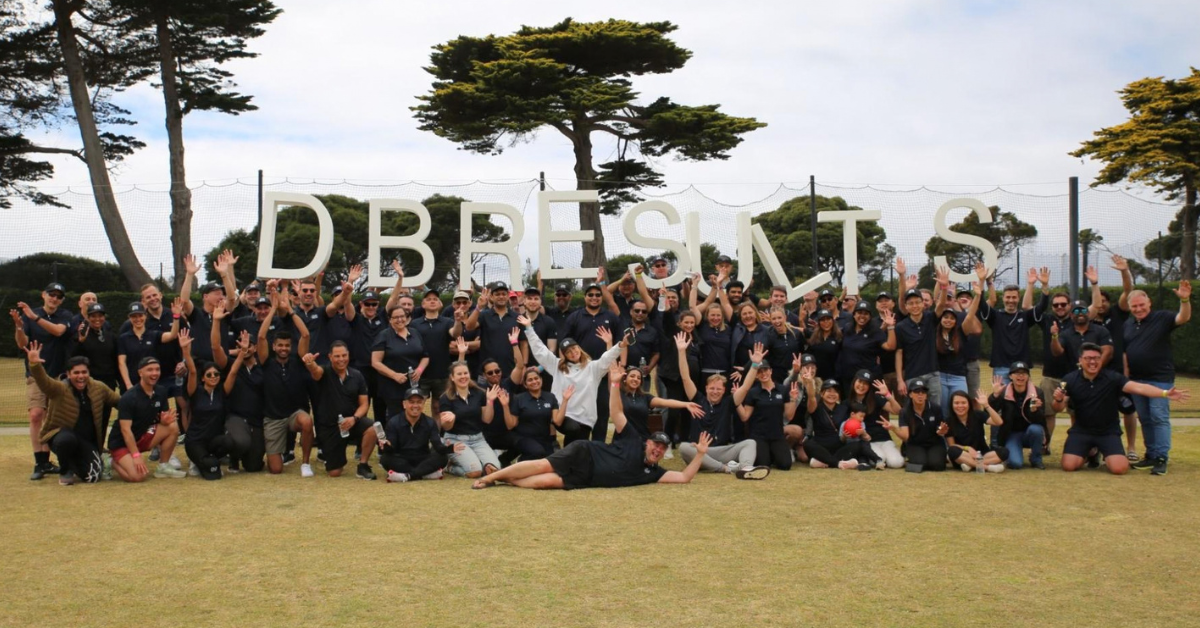
The decision to first undertake B Corp Certification in 2019 was a no-brainer for the company – an instinctive next step rather than an uncharted pivot.
“Becoming a B Corp wasn’t a sudden shift,” says Vikram Gharti, DB Results’ Head of Global Risk, Governance and Impact (known internally as the ‘B Keeper’). “It was a formal commitment to our operational philosophy. B Corp provided a framework that brought greater structure and accountability to that intent. It gave our people, customers and other stakeholders confidence that our values weren’t just stated, they were being validated.”
Gharti worked closely with Rachael Bunshaw, DB Results’ Marketing Communications Manager, on the recertification. Since its foundation, DB Results has activated 216 hands-on community programs, and donated millions of dollars across hundreds of individual philanthropic efforts. These numbers are impressive in their own right – but in B Corp, DB Results’ founders saw a certification that could add a deeper layer of credibility and substance to their work.

B Corp provided a benchmark that was rigorous and internationally recognised. This was not a box-ticking exercise or vanity project, rather an assurance of an already chartered course. For these same reasons, DB Results was one of the first Australian businesses to recertify under the new B Lab Standards.
When recertification came around under the new standards, we were keen to move early. The increased rigour aligned with where we want to be, and moving early on recertification felt consistent with the example we want to set for others considering the same path.
Vikram Gharti, Head of Global Risk, Governance and Impact, DB Results
B Lab’s Standards V2 signal a significant shift in how B Corps get certified, and are designed to ensure the integrity of the certification over the long-term. Rather than a points-based system – in which some businesses could score high in some areas and low in others, and still achieve certification – the standards feature minimum requirements across seven impact areas. The new standards mean that every B Corp Certified business needs to meet the minimum threshold across all seven impact areas: Purpose and Stakeholder Governance; Climate Action; Justice, Equity, Diversity, and Inclusion; Government Affairs and Collective Action; Fair Work; Human Rights; and Environmental Stewardship and Circularity.
The company approached the new certification with the same pragmatic and determined mindset as 2019: the benchmark might be high, but anything less would undermine the seriousness of the work. “Our first reaction [to the new standards] was that it was overwhelming,” Gharti says. “Good intent and best effort were no longer enough on their own. The new standards set the expectation of operational rigour across the board. That felt confronting but it was a necessary shift.”
While DB Results viewed the updated standards as more prescriptive, with minimum expectations now set across every impact area, the benefits of this exactitude were clear from the outset.
“Under the old model, it was possible to perform strongly in some areas and carry gaps in others,” says Gharti. “That’s no longer the case. The higher bar is better for the credibility of B Corp as a whole. It draws a clearer line between organisations that are genuinely embedding responsible practices and those that were able to score well without the substance to match.”
There were some big differences in the certification process this time around, most notably in the breadth and consistency expected across the business. While DB Results already identified as having strong governance in place, the new standards required that discipline to be extended across all impact areas and involved a much broader remit, including assessing its customers, partners, suppliers and stakeholders.
“This reach beyond our formal and contractual boundaries pushed us to genuinely understand who and what we can influence, and how we can work with others to create meaningful change,” Gharti says. “In practice, it meant building greater shared awareness across the organisation, applying the same level of structure in areas that had previously been more informal whilst being more deliberate in how we assess and evidence impact and risk.”
Gharti says climate action is a prime example of this re-balancing. While it is active in this space, DB Results didn’t have the same internal capability or structured approach to climate action as it did in other areas. “We’ve since built a more informed foundation, from understanding our environmental footprint to developing a credible plan for improvement.” DB Results’ new climate action plan covers four key pillars (managing waste, monitoring and reporting on carbon emissions, delivering low-carbon digital solutions for clients, and using their voice to advocate for change), which all ladder up to reaching carbon neutrality by 2050.
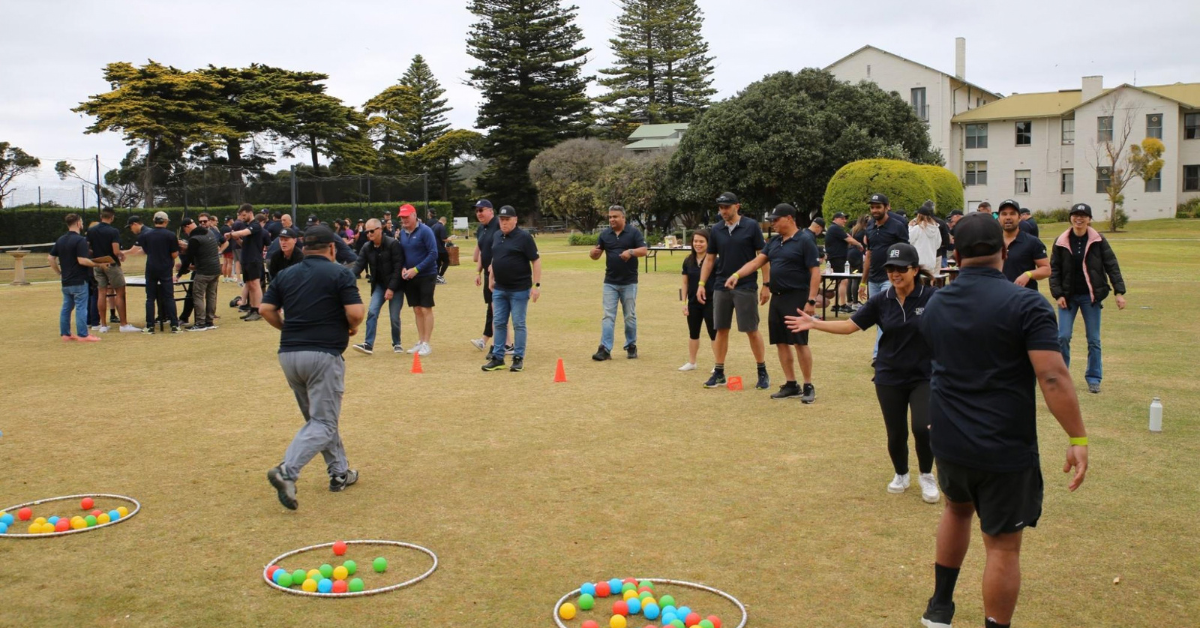
However, there were areas where the business actually felt more confident when approaching the new certification. Namely, Purpose and Stakeholder Governance, which is now its very own impact topic. “Stakeholder governance has always been a strength for us, driven by how deeply we believe in what we are here to do,” says Gharti. “It shows up in the type of work we take on – we only work with aligned businesses, and have a pre-screening process to ensure we don’t engage with organisations that are violating human rights or supporting fossil fuels.”
Among others, DB Results’ stakeholders include communities the company works with, government agencies, the philanthropic and not-for-profit organisations it supports, families and friends of the people it works with, First Nations communities and the environment.
The process of recertification has been a proud moment for DB Results, punctuating the company’s real and sustained efforts to be a force for good while galvanising employees to interrogate what being a B Corp really means and how that can be measured. The result? A newfound understanding across the entire organisation of how purpose translates into real-world impact.
This process raised expectations around behaviours and decision-making at DB Results in a way that felt organic. It also pushed us to look beyond outputs. Reflecting on the ways our people contribute to positive change, and understanding the collective weight of those contributions, reinforced our sense of purpose. These standards encouraged us to be more explicit and accountable in how we embed purpose across the business, which was invaluable.
Vikram Gharti, Head of Global Risk, Governance and Impact, DB Results

