Intrepid tackled the new B Lab Standards with the same grit and determination that has made the company pioneers in the travel sector. The process was daunting but the results, says CEO James Thornton, speak for themselves.
Intrepid has long stood out from the pack. Founded by a couple of mates in 1989, the travel company built its success on a simple but (at the time) radical philosophy: travel should create a positive impact for communities and destinations, while also delivering meaningful experiences for travellers and long-term commercial success.
It’s a tenet from which the business has never strayed, and one which Intrepid decided to validate by first becoming a B Corp in 2018. “As the company grew globally, we wanted a rigorous and credible way to measure our impact, hold ourselves accountable, and demonstrate our commitment to all stakeholders,” says James Thornton, Intrepid’s CEO.
“In an era where concerns about greenwashing and impact washing were growing, B Corp Certification provided an objective assessment of our social and environmental performance, governance, transparency and accountability. It also aligned with our long-term vision of balancing purpose and profit.”
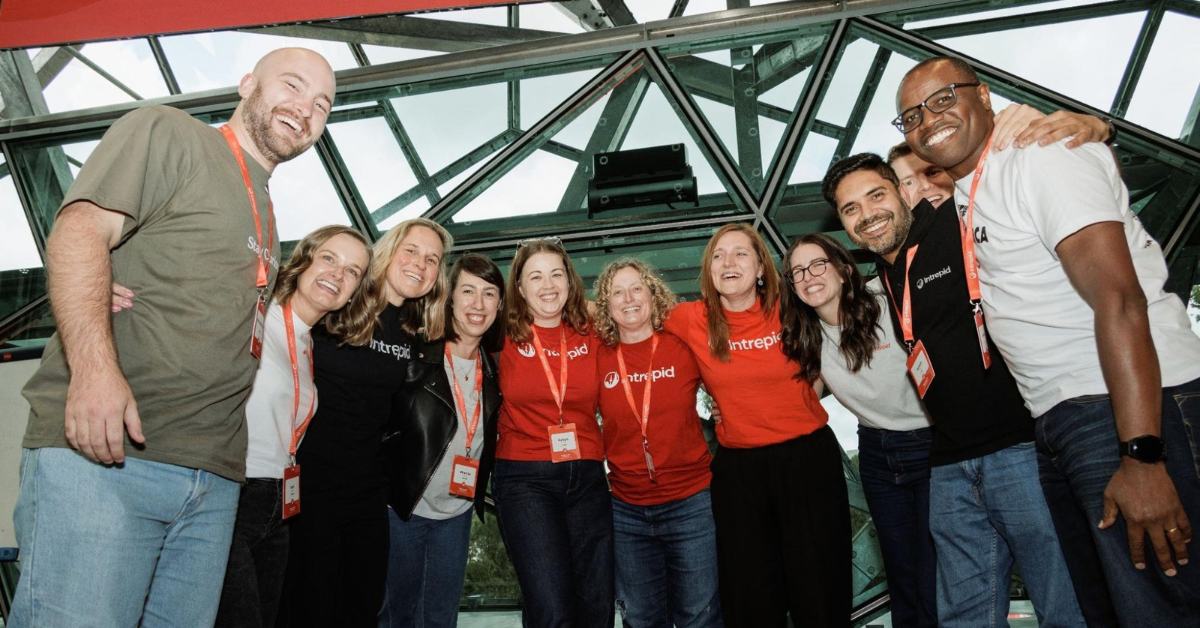
Over time, Intrepid found that the real value of certification came from the framework it provided for the business to grow, while staying true to its core beliefs – helping guide continuous improvement across the business, from advancing employment equity and supply chain diversity to increasing community investment and customer education. “Each recertification challenges us to demonstrate measurable progress, reinforcing our belief that business can be a force for good,” says Thornton.
With this same resolve, the Intrepid team launched themselves into the recertification process for B Lab’s Standards V2, determined to use the new and – at times – challenging scaffolding to reinforce the importance of building strong systems, governance structures and reporting processes that support long-term impact and continuous improvement.
B Lab’s Standards V2 signal a significant shift in how B Corps get certified, and are designed to ensure the integrity of the certification over the long term. Rather than a points-based system, the standards feature minimum requirements across seven impact areas: Purpose & Stakeholder Governance; Climate Action; Justice, Equity, Diversity, & Inclusion; Government Affairs & Collective Action; Fair Work; Human Rights; and Environmental Stewardship & Circularity.

Our world and the business landscape have evolved hugely in recent years. And we need to continue to hold ourselves to higher standards. But, naturally, the process was also daunting because we understood that the new standards raise the bar in many areas.
James Thornton, CEO, Intrepid Travel
The new standards require a far broader cross-functional effort and place a greater emphasis on environmental and social risks, which Thornton says required a deeper level of assessments than Intrepid had previously undertaken (not least because Intrepid’s portfolio has grown in recent years to include new offerings, such as accommodation).
“For a global business like Intrepid, that means engaging a much wider range of stakeholders, from people and procurement teams through to our people leading our trip and accommodation operations,” Thornton explains. “The process encourages businesses to take a more integrated approach to managing social and environmental impact.”
Climate action has been a strategic focus for Intrepid for many years, with the company publicly measuring and disclosing their emissions and carbon footprint long before it became a regulatory requirement. They also published their first Climate-related Disclosure in 2025, and have been investing in emissions-reduction initiatives through a Climate Impact Fund. Consequently, this is the impact area they felt the most confident tackling this time around.
“The new standards challenged us to demonstrate this work in a structured way, but the foundations were already firmly in place,” says Thornton.

With strong ethical content guidelines well established at Intrepid, Thornton says the new B Lab Standards required by the ‘Responsible Marketing and PR Policy’ provided the opportunity for the business to build upon work they were already proud of. It prompted Intrepid to think more deeply about the influence that external communications can have on consumers, communities, and destinations.
It helped us create clearer guardrails around how we communicate, represent people and places, and avoid unintended harm. It’s a great example of how the new standards don’t just validate what you’re already doing well, they encourage you to strengthen and formalise practices in ways that create lasting value.
James Thornton, CEO, Intrepid Travel
Equally, the new standards challenged Intrepid to not only focus on the positive impact of the business, but also develop a genuine and intentional understanding of where negative human rights and environmental impacts could occur across their operations and value chain.
“For a global travel company operating across diverse destinations, supply chains, and communities, that process reinforced the importance of continually looking beyond direct operations and considering impacts throughout the broader ecosystem in which we operate,” says Thornton.
Stakeholder governance has long been a part of Intrepid’s approach, with customers, team members, local communities, suppliers, industry partners, and the environment making up the broad range of perspectives the business considers in its operations. Engagement with these stakeholders occurs both formally and informally – from surveys and focus groups to employee listening programs, supplier engagement, stakeholder panels, community consultations and partnerships with non-profits, academic institutions and local organisations.
With ‘Purpose & Stakeholder Governance’ its own impact area under the new standards, Intrepid was able to focus on this area with renewed vigour. “For this certification, we undertook a double materiality assessment approach for the first time,” says Thornton. “And while it reconfirmed our material issues, the process of engaging our stakeholders was particularly valuable. We received over 6,000 comments in the survey, which has informed a set of recommendations of how to improve the business from the voices of the people and places that it impacts.”
Importantly, this stakeholder engagement doesn’t just sit within one team. Leaders across the business are expected to consult with stakeholders, consider feedback in decision-making, and maintain ongoing dialogue with the communities and partners Intrepid works with. “By bringing those perspectives into strategy and operations, we can make better decisions and create long-term value for all stakeholders, not just shareholders,” says Thornton.
While Thornton notes undertaking recertification for B Lab’s Standards V2 was more exacting, he says the value of the added rigour is undeniable – strengthening the credibility of the certification and better reflecting the growing expectations of businesses to deliver measurable social and environmental outcomes. “For Intrepid, it reinforces the importance of building strong systems, governance structures and reporting processes that support long-term impact and continuous improvement,” he says.

