One Stone Asia Pacific CEO Andrea Spencer-Cooke makes no bones that the new B Lab Standards challenged their business to be better. But she counters: if that’s not the point of B Corp, what is?
One question has underpinned One Stone Asia Pacific’s purpose since day one: how much good can we do with this business?
Having previously co-founded Scotland’s first (and the UK’s first women-owned) B Corp, the purpose-driven advisory firm launched in Australia in 2016 with over 20 years of international experience leading on sustainable business solutions. It was a unique opportunity to answer this question anew, and B Corp was the natural framework through which to do this.
“B Corp was the only sustainability certification covering the whole 360,” says Andrea Spencer-Cooke, CEO. “Being a B Corp helps us walk the talk as sustainability advisors with the same challenges and solutions our clients navigate every day.”
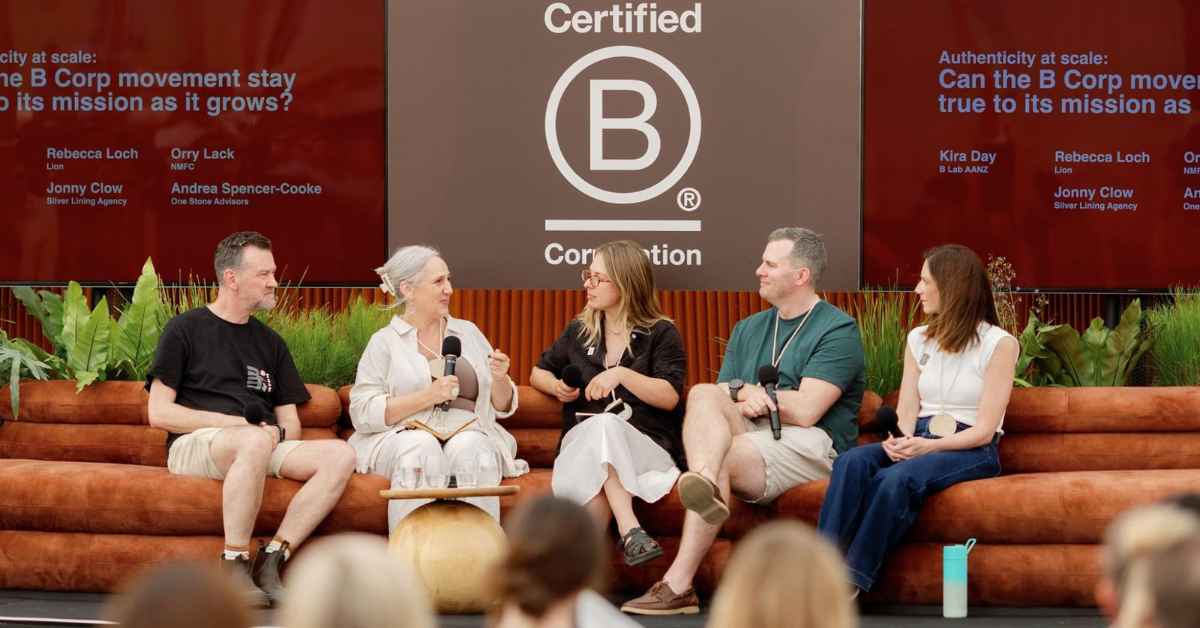
Image: Elin Bandmann
One Stone Asia Pacific works with government, private and not-for-profit organisations to help them be more effective sustainability leaders and create measurable positive impact. They’ve helped Sydney Opera House align with the Sustainable Development Goals and lead on the 2030 Agenda; supported Kennards Hire to strengthen ESG impact goals and metrics; and worked with Intrepid Travel to develop a new purpose strategy and prepare for new B Corp standards.
Being a B Corp is built into the fabric of One Stone. It’s not an ‘added extra’, rather the key ingredient and shared language that enables the work they do and makes them part of a bigger, impact-driven movement. “It is the people, the community and the unshakeable shared belief that there’s a better way to do business that motivates us to remain certified,” says Spencer-Cooke.
B Lab’s Standards Version 2 (V2) signal a significant shift in how B Corps get certified, and are designed to ensure the integrity of the certification over the long term. Rather than a points-based system – in which some businesses could score high in some areas and low in others, and still achieve certification – the new standards feature minimum requirements across seven impact areas. The new standards mean that every B Corp needs to meet the minimum threshold across all seven impact areas: Purpose and Stakeholder Governance; Climate Action; Justice, Equity, Diversity and Inclusion; Government Affairs and Collective Action; Fair Work; Human Rights; and Environmental Stewardship and Circularity.
One Stone Asia Pacific was actively involved in the public consultation process to shape the new B Lab Standards, giving them more time to get their head around the changes. “Even so,” reflects Spencer-Cooke, “seeing the differences ‘on paper’ and experiencing them ‘in practice’ was a huge eye-opener! There was blood, sweat, tears and late nights – but also relief and exhilaration – all bundled together.”
Despite the effort involved, Spencer-Cooke is confident that the new B Lab Standards present clear advantages, ultimately fortifying the certification with a move away from a system that was more “choose your own adventure” in nature.
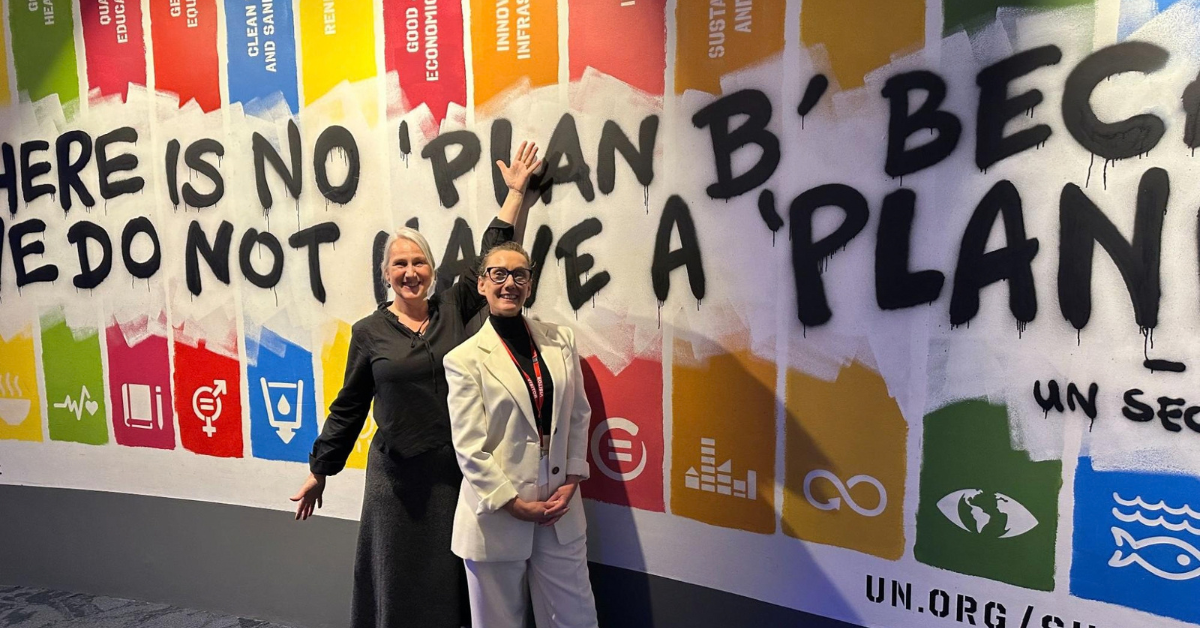
Now, every business – depending on size and sector – must meet the same requirements across the seven impact areas, plus foundational risk requirements. It’s clearer, more prescriptive and demands performance uplift across all areas. It means all B Corps must have good systems and processes in place to manage their material impacts. The rigour of third-party assurance is also a game-changer.
Andrea Spencer-Cooke, CEO, One Stone Asia Pacific
The new standards provide a platform for businesses to lean into key strengths, too. One Stone Asia Pacific has been involved in lots of pro bono collective action for sustainability, including mentoring women, shaping policy and standards with DCCEEW and Standards Australia, as well as demonstrating thought leadership through peer-reviewed articles on sustainability in arts and culture. As such, they were particularly confident when it came to addressing the Government Affairs and Collective Action requirements.
But the area where One Stone predicts B Corps will feel most comfortable is Purpose and Stakeholder Governance (PSG) which is now its own impact topic in the new standards. “B Corps are, by definition, purpose- and stakeholder-led, so this area comes quite naturally,” Spencer-Cooke says.
“Our stakeholders include customers, co-workers, contractors and suppliers, local community and the environment,” she continues. “We use informal discussion, satisfaction surveys, events, research and global standards to validate what matters to them. And last but not least, we try to lead with empathy and impact as a foundation for doing business better and growing great working relationships. So, for us, PSG was hands-down the topic with the most organic evolution [between the standards].”
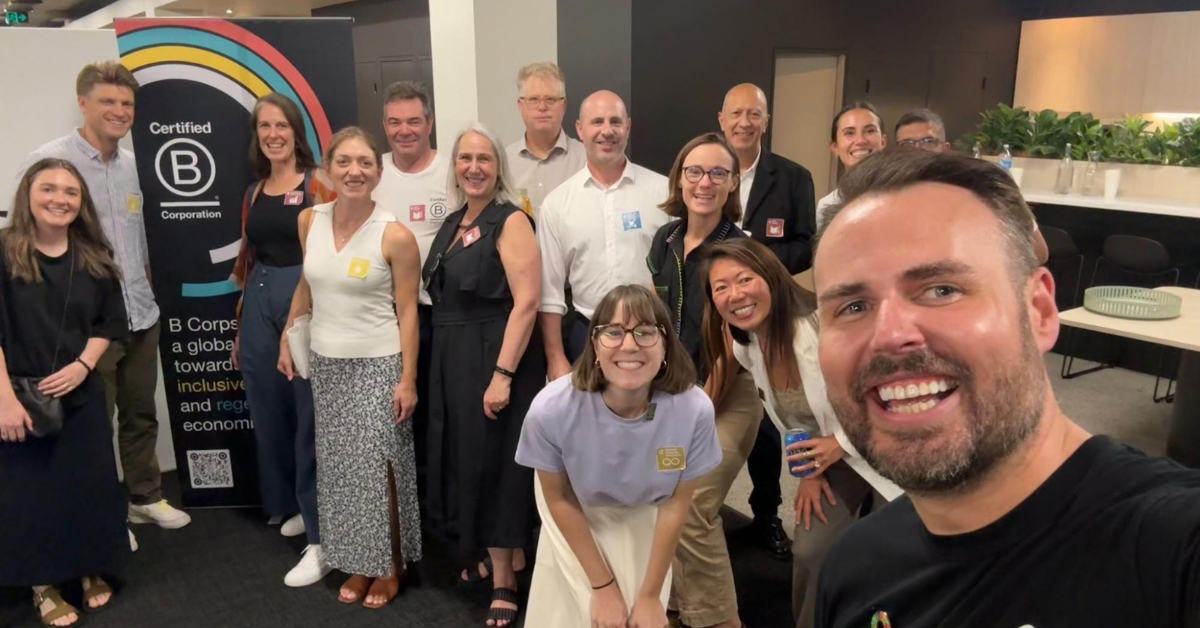
If you’re gearing up for recertification, the biggest piece of advice from B Lab’s Community Transition Lead, Lauren Diggle, is not to try and tackle everything at once.
The new standards are comprehensive, but breaking them down makes a world of difference. I always recommend diving into one impact topic at a time directly inside the B Impact platform – it’s packed with helpful support guides and all of the relevant compliance criteria.
Lauren Diggle, Community Transition Lead, B Lab Australia & Aotearoa New Zealand
A great place to start is delegating: assign specific requirements to different team members, and update live statuses as you go. The status feature is perfect for conducting an initial gap analysis to understand where your business may need to spend time on improvements. “It’s also important to celebrate your wins along the way,” adds Diggle.
Spencer-Cooke doesn’t mince her words: recertification takes effort, but she believes the payoff is worth it. “It is a big change,” she says. “But it’s something that needed to happen. B Corp is about redefining success in business, so challenging ourselves to be better is something all B Corps can get behind.”
