May 27 – June 3 marks National Reconciliation Week: a week for Indigenous and non-Indigenous people to walk together toward greater awareness, equity and respect for Aboriginal and Torres Strait Islander peoples.
In the lead-up, we interviewed Wayne Denning, a member of our B Corp community whose creative agency, Carbon Creative, collaborated with Reconciliation Australia on this year’s campaign: All In.
He shared with us what he believes reconciliation means in post-referendum Australia, the things that give him hope, and what he believes every Australian business, organisation and individual can do to be ‘all in’.
Please introduce yourself, your background, and your company.
I’m Wayne Denning, a Birri-Gubba and Guugu Yimidhirr man from Central Queensland. My family was moved into a community called Woorabinda as European settlement occurred, but my roots go back to traditional countries further afield.
I’m the founder and Managing Director of Carbon Creative, a First Nations owned and operated social impact creative agency. We’ve been in operation for 20 years now.
I created the company out of a deep sense of frustration from my previous career in the federal government. I was tired of the lack of listening regarding First Nations policies and the negative, stereotypical reporting that dominated the media.
Today, Carbon sits at the intersection of brand, story, and First Nations cultural integrity, with a broader commitment to social impact for all audiences. We work across government, corporate, and not-for-profit sectors with a consistent thread: when First Nations voices and craft are at the centre of communications, the work moves further and lasts longer. It’s about taking our 65,000 years of learning and threading it into human stories that connect with diverse audiences and contribute to positive social change.
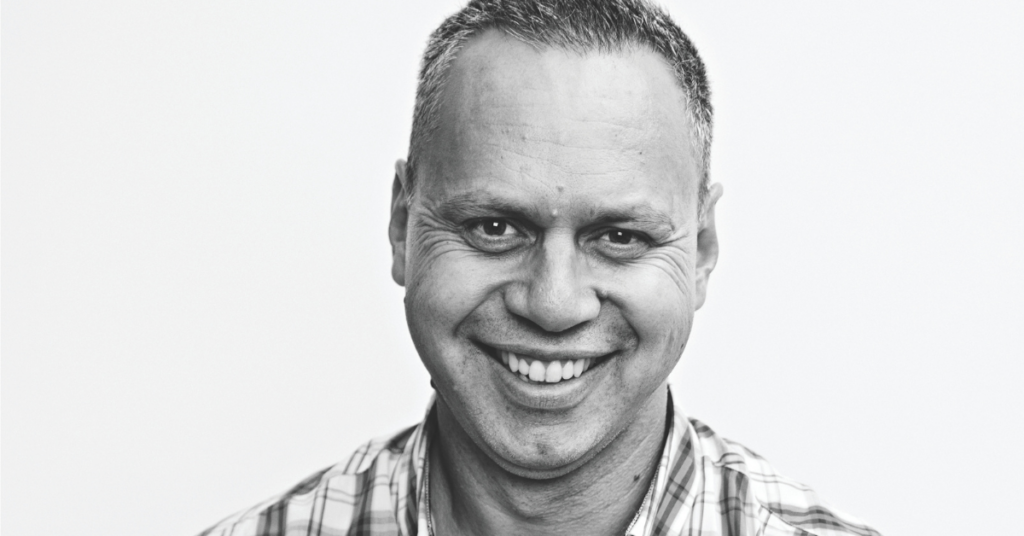
Image: Carbon Creative
Can you share a bit about the theme and key messages of the 2026 National Reconciliation Week campaign?
This year is Reconciliation Australia’s 25th anniversary, which is a major milestone. It’s a time to honour the progress of those who worked tirelessly before us, but it’s also a moment to confront the fact that many things haven’t changed in those two plus decades. We don’t want to be in the same place in another 25 years.
The theme “All In for Reconciliation” is a rally cry to every Australian: individuals, families, communities, organisations, and government. It’s an invitation to move beyond passive support and commit to reconciliation as a daily practice, not just something you dip in and out of for one week in May.
Importantly, this isn’t a burden for First Nations people to carry alone. This is a shared responsibility for all of us to shoulder, replacing guilt or shame with truth-telling and a genuine commitment to forever change.
What was the process of developing the campaign?
Our process always starts with a comprehensive social and environmental audit — a look at our world post-referendum. We look at both the good, like the six million-plus “Yes” voters, as well as the societal regression seen in ongoing injustices, inequities, and systemic racism.
We co-design the theme closely with Reconciliation Australia (RA), bringing together their whole team to funnel collective strategy into creative territory. We use measures like RA’s Australian Reconciliation Barometer as a guide to see what needs to be prodded or pulled back.
Once the theme is locked, we anchor it in First Nations artwork. This year, we worked with Gumbaynggirr Bundjalung artist Otis Hope Carey on his piece titled Gaagal (Ocean). It’s a topographical reading of moving water — concentric circles, currents, and tides — that Otis describes as people from all walks of life being connected, and “all in,” to make change. This artwork makes the “All In” theme visible, showing how we all flow toward the same goal.
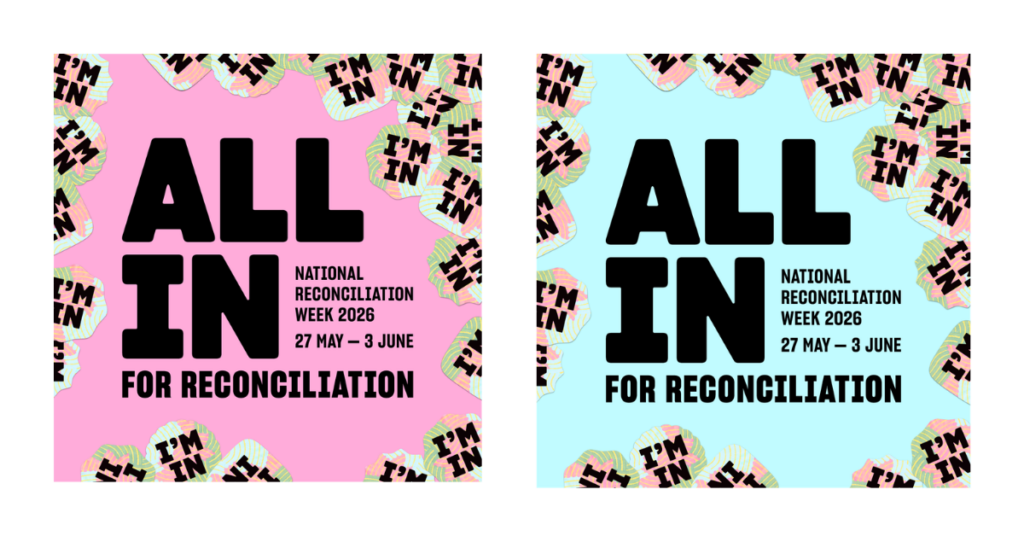
Image: Carbon Creative
This isn’t the first National Reconciliation Week campaign that Carbon has collaborated on, which means you’ve clearly developed a strong working relationship with Reconciliation Australia. What values and worldview does Carbon bring to projects, and what does this mean in terms of your approach?
Long before I was officially working with Reconciliation Australia, I was a believer in this movement. I had the privilege of walking across the Sydney Harbour Bridge in 2000 with 200,000 fellow Australians for “justice and equity for all”.
Twenty-six years later, it’s confronting to still be fighting for that same outcome. Reconciliation has progressed, but I’d be lying if I said it doesn’t have a long way to go.
That reality is our opportunity. At Carbon, we don’t only work on First Nations projects, but we take our knowledge, learning and craft, and thread it into everything we do, because these are ultimately all human stories.
We believe there is so much to be gained and celebrated in our oldest living culture when you approach it with an open mind and empathy. This isn’t about taking anything away from anyone. It’s the exact opposite: it’s about adding the depth of our history to our national identity.
Video: Carbon Creative
Can you share a little of your view on how the failed referendum has impacted or altered Australia’s reconciliation journey?
The failure of the referendum had a devastating impact on many of us, myself included. At its heart, it felt like a rejection of the oldest living culture on the planet and its place in our Constitution. And it was really given as a gift for all Australians to share in 65,000 years of learning and leadership and community. At the very least an acknowledgement. And that was rejected.
The referendum had an opportunity to deliver a big step towards truth-telling and meaningful change. So, to have that destroyed by misinformation, disinformation, political scaremongering, bad intent and politicisation was disappointing because it was something that everyone started out supporting and then became divided on.
That lack of recognition has, sadly, given some people a “social license” to regress and dismiss the push for equity for First Nations peoples. It’s empowered people to feel that we’ve said “no” to all things Aboriginal, we’ve said “no” to the reconciliation process, and we’ve said “no” to things like Welcome to Country. That’s not what the referendum outcome meant.
However, we are survivors. Even in that disappointment, there is momentum to build on and hope to steer us. We saw both sides of this just recently on ANZAC Day. While some disrupted Welcome to Country ceremonies — proving that gaps in historical understanding are still wide — ordinary Australians in those crowds applauded the recognition of First Nations custodians in service. The best and worst at once.
That tells me that “All In” is already alive in everyday Australians, even when the loudest voices are trying to drown it out. We have to keep moving forward with small steps, even when we have to shuffle sideways at times.
What does reconciliation mean to you in post-referendum Australia, and what role does National Reconciliation Week play?
Reconciliation isn’t a one-off event. It’s unfinished business that requires daily momentum. While we spotlight it in May, to me, reconciliation is all year round. Each and every day we should be championing and fostering genuine positive change at both an individual and institutional level.
National Reconciliation Week serves as a critical moment to revisit the basics, like simply starting a conversation or sharing a dialogue over a cup of tea, and the connection keeps building. It’s a time for all Australians to realise that reconciliation is not a spectator sport.
Each and every one of us has the capability to take action, and however small those actions seem, they add up. Whether you are in a school or a corporate office, you can find ideas for action on the RA website and start moving from being a bystander to being “all in”.
How should non-Indigenous Australians get involved?
There is a common misunderstanding that this week is only for Aboriginal and Torres Strait Islander people. While we are at the core of it, the movement must be led and championed by non-First Nations people as a shared responsibility. Often, the simplest things are the most profound. Be deliberate.
Do a few small things to open your mind: learn a truth or two about First Nations history; pressure-test something you may have assumed about Aboriginal and Torres Strait Islander people with a credible source; talk about it with your family or friends; and check your unconscious bias. There is nothing to fear and much to be gained.
Right now, the most concrete action you can take is to keep visibly supporting Welcomes to and Acknowledgements of Country. After the disruptions we saw at Dawn Services this year, backing away is exactly the wrong lesson to draw. Be the person who claps. Be the parent who explains to your kids what an Acknowledgement actually means. That is “All In” in practice.
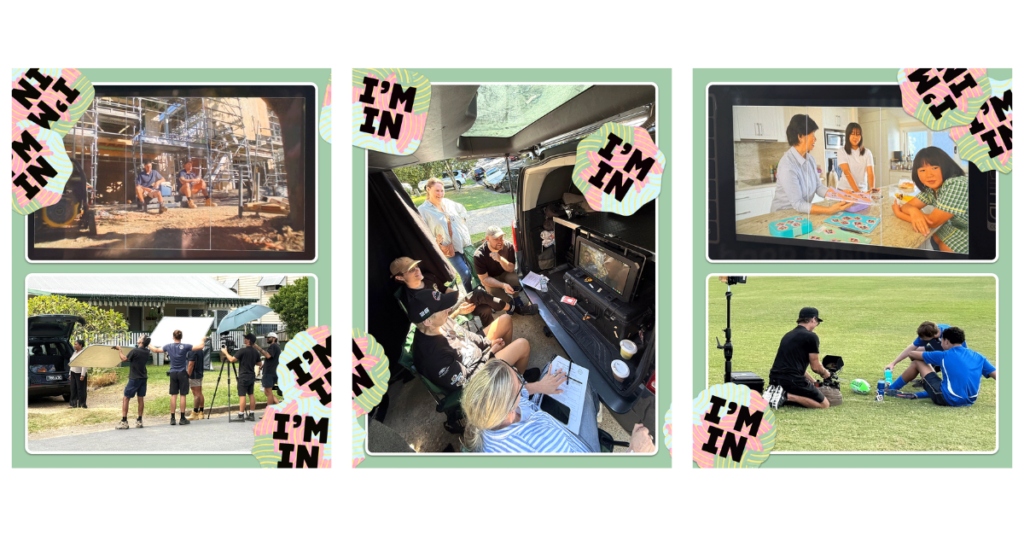
Images: Carbon Creative
What role can organisations and businesses play in promoting reconciliation?
While many use formal Reconciliation Action Plans and these obviously play an important role, you don’t actually need one to start making an impact. It’s the small, collective actions within a business that grow and influence lasting change.
Organisations and businesses present scale, and they present an opportunity to actually take that learning on and participate in thought leadership. They can serve as really structured environments for facilitating First Nations truth-telling and reconciliation, and being practical about how it applies.
One urgent piece of advice I have for businesses right now: hold the line on Welcomes to and Acknowledgements of Country. I know there is quiet pressure in some boardrooms to drop them in the wake of recent events. That pressure should be resisted. These aren’t just “tokenistic feel-good ceremonies” — they are simple, profound protocols of respect that acknowledge First Nations Custodians, and they are needed now more than ever.
How can the B Corp community walk alongside First Nations people on the reconciliation journey?
With the B Corp community in Australia and New Zealand growing significantly year on year, we have the scope to make real, lasting, meaningful impact at scale. My advice is to be deliberate. Come together as a business, group, or community and host an event.
We’ve been talking about the good old-fashioned morning or afternoon tea — not just for the ceremonial, tokenistic cupcake, but as a way to create a safe space to have meaningful dialogue and connection with each other, test your unconscious biases, and create a learning and truth-telling opportunity.
At that same event, or even in a smaller moment, make a lasting commitment to build a reconciliatory action into your everyday. Define what it looks like. It will grow and evolve. Share it around, keep it going, and check in on it. If you lose momentum, don’t panic. Pick up where you left off, start a new action, or follow up on the change you’re trying to make. A little goes a long way.
Lastly, can you share some personal sources of pride, hope or energy around reconciliation?
My energy comes from the ‘young’. There’s a generation of First Nations creatives, scientists, lawyers, athletes, and entrepreneurs coming through right now who aren’t asking for permission — they’re just powering on and building. That gives me a level of energy I can’t manufacture any other way.
I also find strength in the Elders who keep teaching me quietly and generously. Their ability to take the headwinds — as they say, you stand on the shoulders of giants. What they’ve been able to achieve: my own family, grandmothers, their profound endurance and resilience. I’ve taken that away and applied that to the reconciliation process.
And then there’s Country itself. Every time I get back on Country, the noise just falls away. It’s the oldest classroom in the world, and it never stops teaching.
I also take great pride in the Australians who applauded those Welcomes at the Dawn Services: that’s the country I work for.
Finally, I’m proud of the work we do at Carbon. Twenty-six years after the Bridge Walk, I’m still here, my team is still here, and we get the privilege of making work that nudges this country forward by inches every year. That is a privilege I don’t take lightly.

